Cleaner Ultrasonic
Ultrasonic cleaning uses high frequency sound waves to agitate in a liquid. Cavitation
bubbles induced by the agitation act on contaminants adhering to
substrates like metals, plastics, glass, rubber, and ceramics. This
action also penetrates blind holes,
cracks, and recesses. The intention is to thoroughly remove all traces
of contamination tightly adhering or embedded onto solid surfaces. Water or other solvents
can be used, depending on the type of contamination and the workpiece.
Contaminants can include dust, dirt, oil, pigments, rust, grease, algae,
fungus, bacteria, lime scale, polishing compounds, flux agents,
fingerprints, soot wax and mold release agents, biological soil like
blood, and so on. Ultrasonic cleaning can be used for a wide range of
workpiece shapes, sizes and materials, and may not require the part to
be disassembled prior to cleaning. Objects must not be allowed to rest on the bottom of the device during the cleaning process, because that will prevent cavitation from taking place on the part of the object not in contact with water.
Cleaner Ultrasonic

Cleaner Ultrasonic

Cleaner Ultrasonic
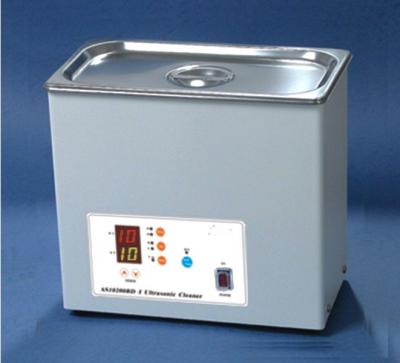
Cleaner Ultrasonic

Cleaner Ultrasonic

Cleaner Ultrasonic

Cleaner Ultrasonic

Cleaner Ultrasonic

